
Replacing worn plates should help restore refining performance. However, MDF producers may find more shives, coarse fibers, excessive fines, or inconsistent fiber quality after installing a new set.
This does not necessarily mean the new plates are defective. The replacement may have changed the refining conditions, or another process variable may have changed at the same time.
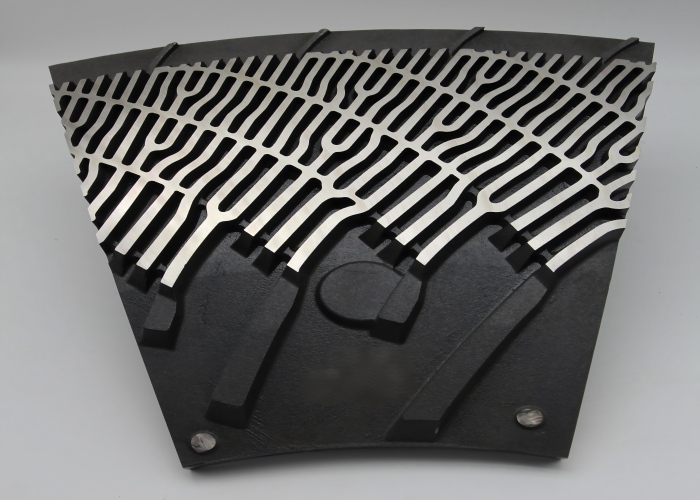
The bar and groove pattern affects chip movement and fiber separation. Differences in bar geometry, groove arrangement, and refining-zone design can change the refining action.
When selecting MDF refiner plates, compare the original plate design, refiner configuration, wood species, and required fiber properties. Matching the outside dimensions alone is not enough.
Incorrect segment seating, debris on mounting surfaces, or uneven installation can affect rotor-stator alignment. An unsuitable initial gap or adjustment can also result in under-refining or excessive refining.
Inspect the mounting surfaces and installation condition. Follow the machine manufacturer's procedure when checking or adjusting the gap. The MDF defibrator configuration should be considered when assessing plate compatibility.
Material composition, microstructure, heat treatment, dimensional accuracy, and tooth geometry all matter. A higher hardness value or chromium content by itself does not guarantee better fiber quality.
Check whether the replacement matches the required drawings and specifications. Also inspect the working surface for visible defects or damage.
Fiber quality depends on more than the refiner plates. Wood species, chip size, moisture, contaminants, steam pressure, feed rate, throughput, and refiner load can all influence the result.
Review production records to see whether any of these conditions changed during the replacement period. Comparing only the old and new plates may overlook the actual cause.
Use the same sampling and testing approach before and after replacement where possible. Compare:
Shive content and fiber-length distribution
Fines and other available fiber-quality indicators
Motor load and specific energy
Production rate and refining gap
Plate condition, alignment, and wear pattern
The MDF/HDF refiner segment wear and performance guide provides additional context for evaluating plate condition and refining performance.
When fiber quality deteriorates after replacing refiner plates, investigate plate geometry, installation, gap settings, and process conditions as one system. Avoid changing several operating parameters at once, because this makes the root cause harder to identify.
HUATAO supplies customized MDF refiner plates according to equipment requirements and customer drawings. For a technical review, provide the refiner model, old and new plate photos or drawings, and available fiber-quality and operating data.
Contact
Lucy Chai
| Lucy.chai@huataogroup.com
| www.refinerdisc.com
| WhatsApp: +86 15373883537
can not be empty
can not be empty

HUATAO GROUP - REFINER PLATES
ADD : No.298 Zhonghua North Street, Shijiazhuang 050000 China.
TEL : +86 0311 80690567
EMAIL :Lucy.chai@huataogroup.com
Web: www.refinerdisc.com
 WhatsApp & WeChat : +86 15373883537